Informational Videos
In this video, Sonya Durham and Hannah Carrigan show vocational rehabilitation professionals how to look beyond traditional tests and one-time evaluations, which often miss the full picture for job seekers with disabilities. By treating everyday interactions, behavior, and real-world observations as ongoing assessment tools, professionals can discover genuine strengths and adapt career plans to create lasting, meaningful job placements.
Translating Data Into Opportunities
Sonya Durham and Hannah Carrigan demonstrate how vocational rehabilitation counselors can launch career assessments by focusing on the student first through the awareness phase ("Who am I?"). Using a case study of a student aiming to own a video game company, they detail how to uncover strengths, preferences, interests, and support needs while fostering self-advocacy and self-determination. Counselors will learn to ask better, curiosity-driven questions that build strong foundations for career exploration and competitive integrated employment.
Preparing VR Participants for STEM Careers Through AI Innovation
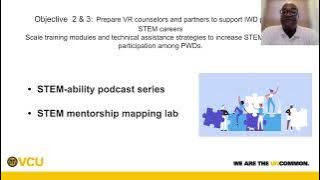
John Fife, Ph.D., director of VCU’s Center for Innovation in STEM Education, discusses how IRACA’s Project 3 helps vocational rehabilitation counselors support individuals with disabilities in STEM. The initiative provides podcasts, accessibility and assistive technology training, barrier-reduction strategies, and mentorship mapping to foster belonging. Dr. Fife emphasizes that beyond academics, success requires accessible environments, encouragement, and targeted mentorship, offering VR counselors practical ways to leverage AI tools and network mapping to expand STEM career access.
How to Find Scholarship Opportunities for Students - 5 Tips with Jaclyn Camden

College costs can create major barriers for students with disabilities. In this video, Jaclyn Camden shares 5 practical tips for vocational rehabilitation counselors to help students secure funding, including leveraging campus resources and local awards, creating reusable essays, spotting scams, and navigating displacement policies. Use these strategies to save time, reduce financial stress, and support college success.